10 jump rope exercises, from the basic bounce to double unders
 By Rupangkan KalitaUpdated
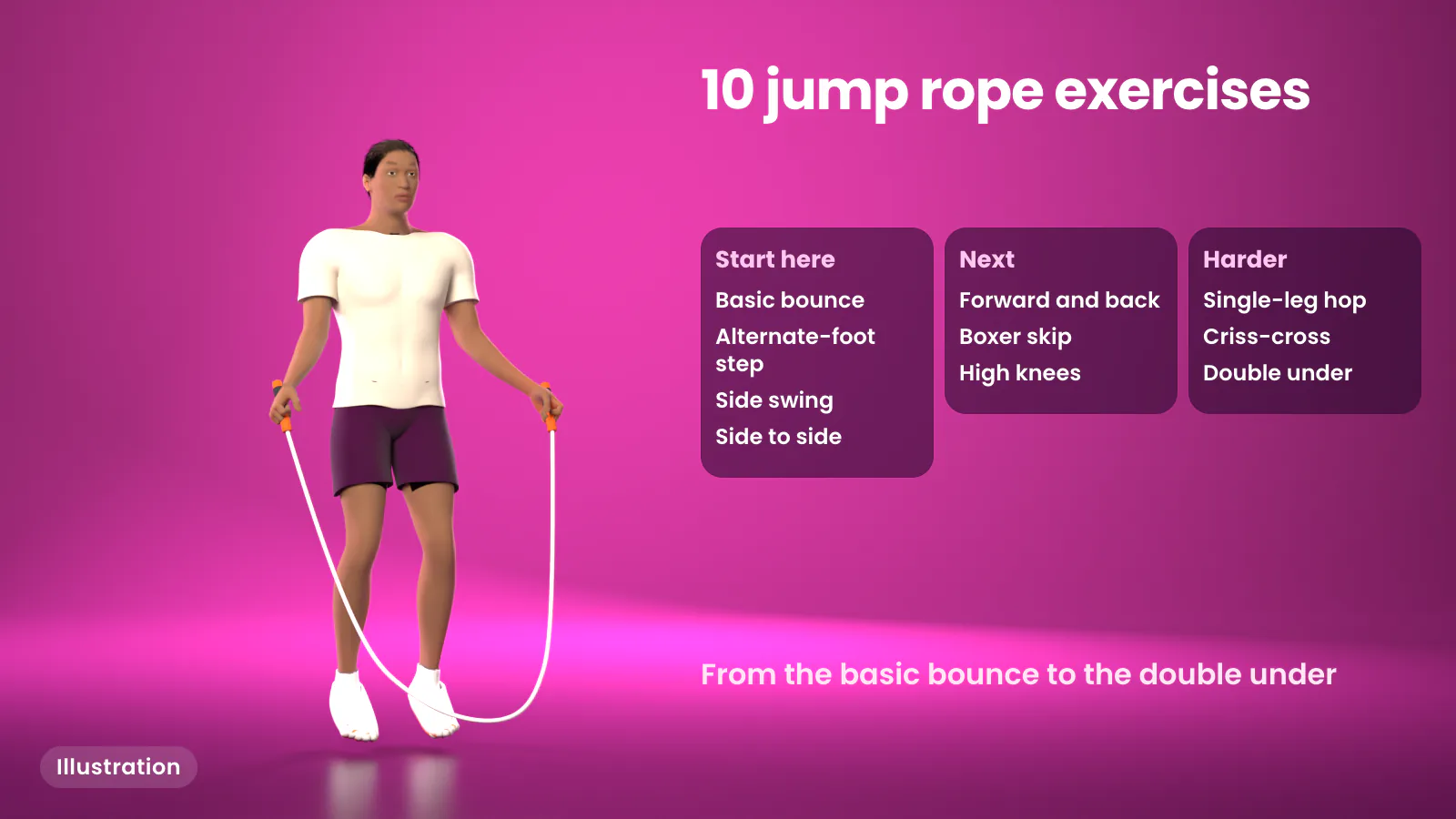
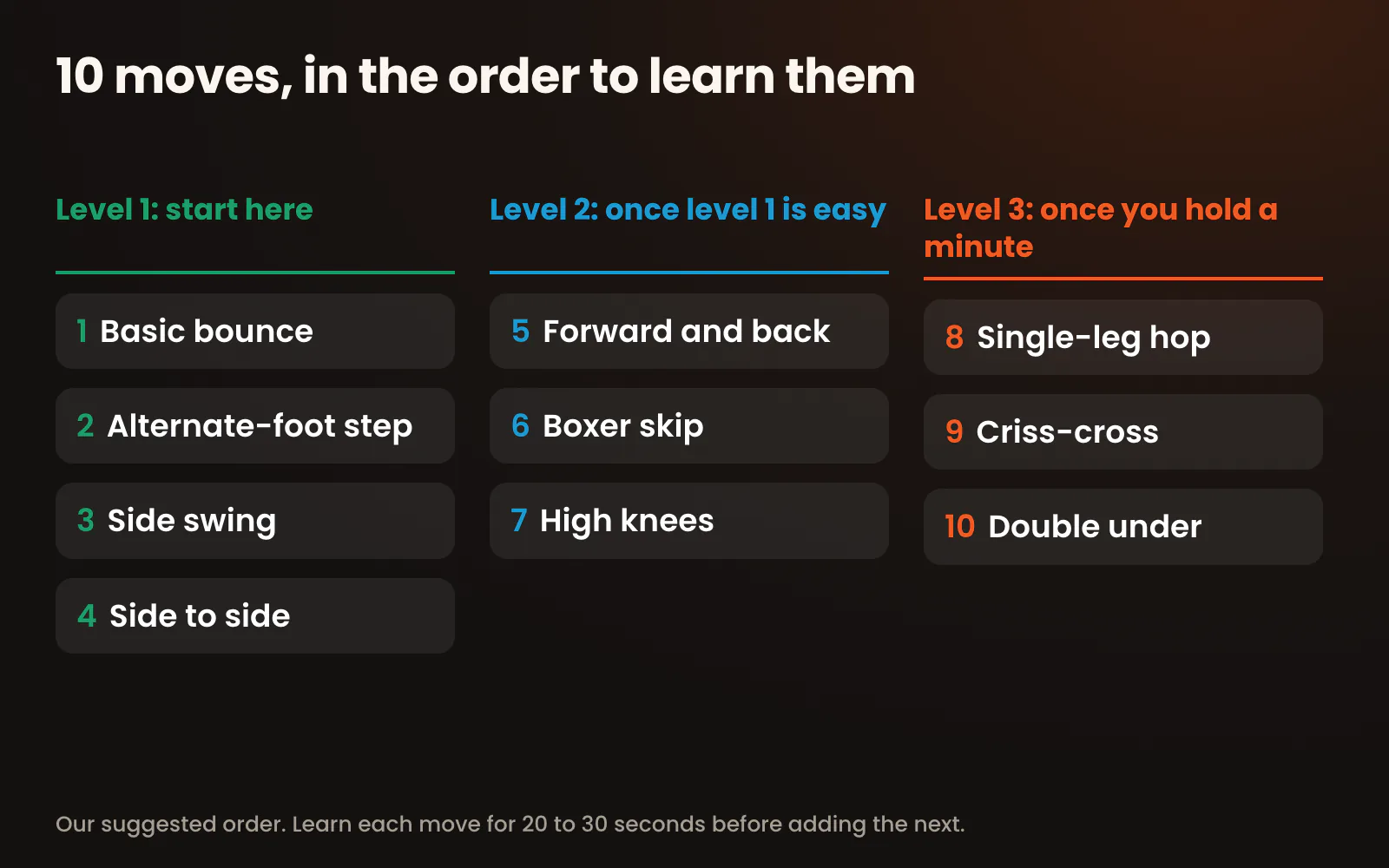
Learn them in three levels. Level 1: basic bounce, alternate-foot step, side swing, side to side. Level 2, once those are easy: forward and back, boxer skip, high knees. Level 3, once you can jump for a minute: single-leg hop, criss-cross and the double under. Practise each new move for 20 to 30 seconds at a time, mixed into sets of the basic bounce.
Most jump rope exercises are the basic bounce with one thing changed: where your feet land, which foot takes the weight, or how many times the rope turns. Learn them in order and each new move feels like a small step from the last one.
The order and the levels below are our suggestion. Practise each new move for 20 to 30 seconds at a time, mixed into sets of the basic bounce, and move up a level once the moves feel easy.
Level 1: start here
1. Basic bounce
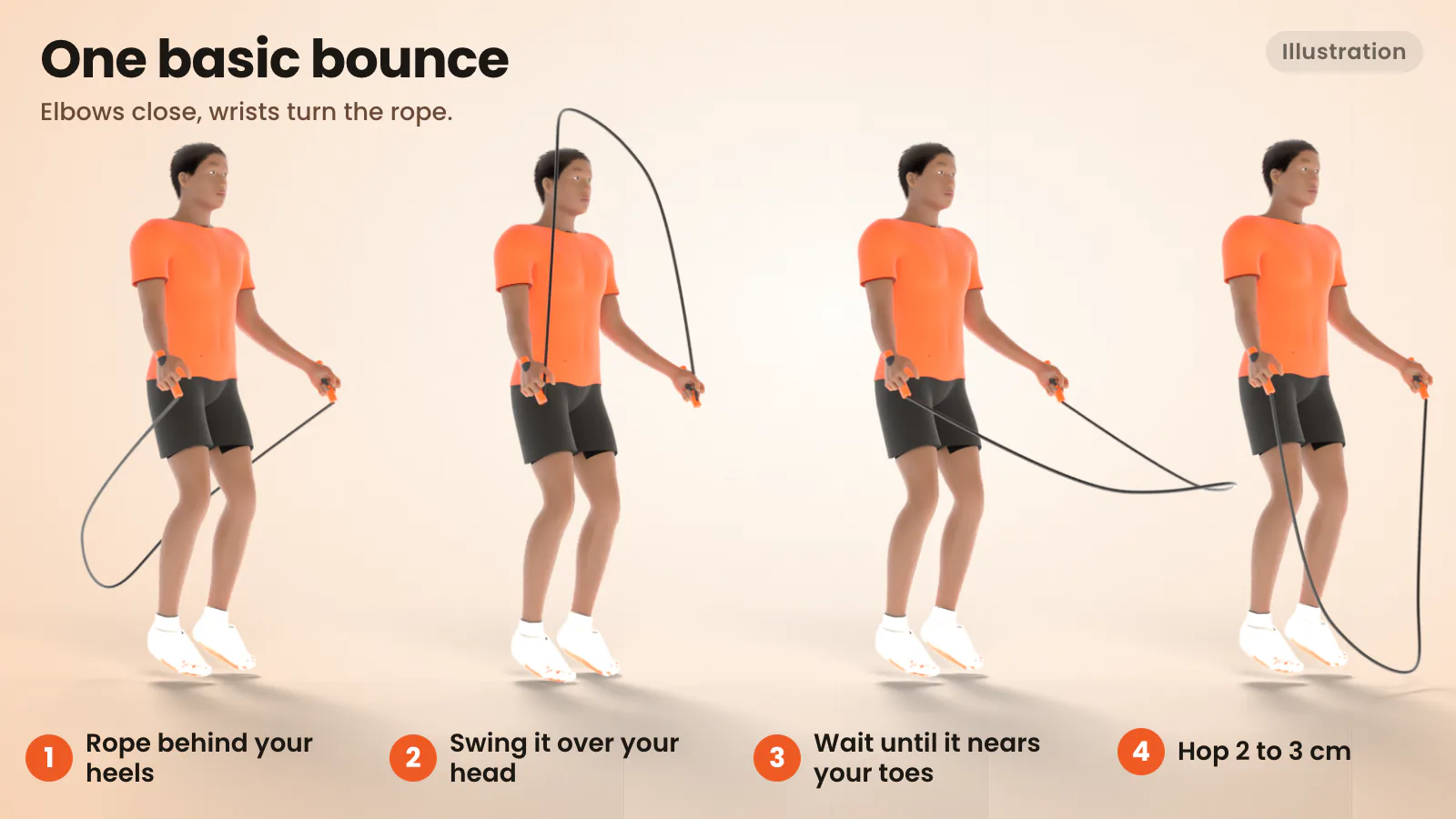
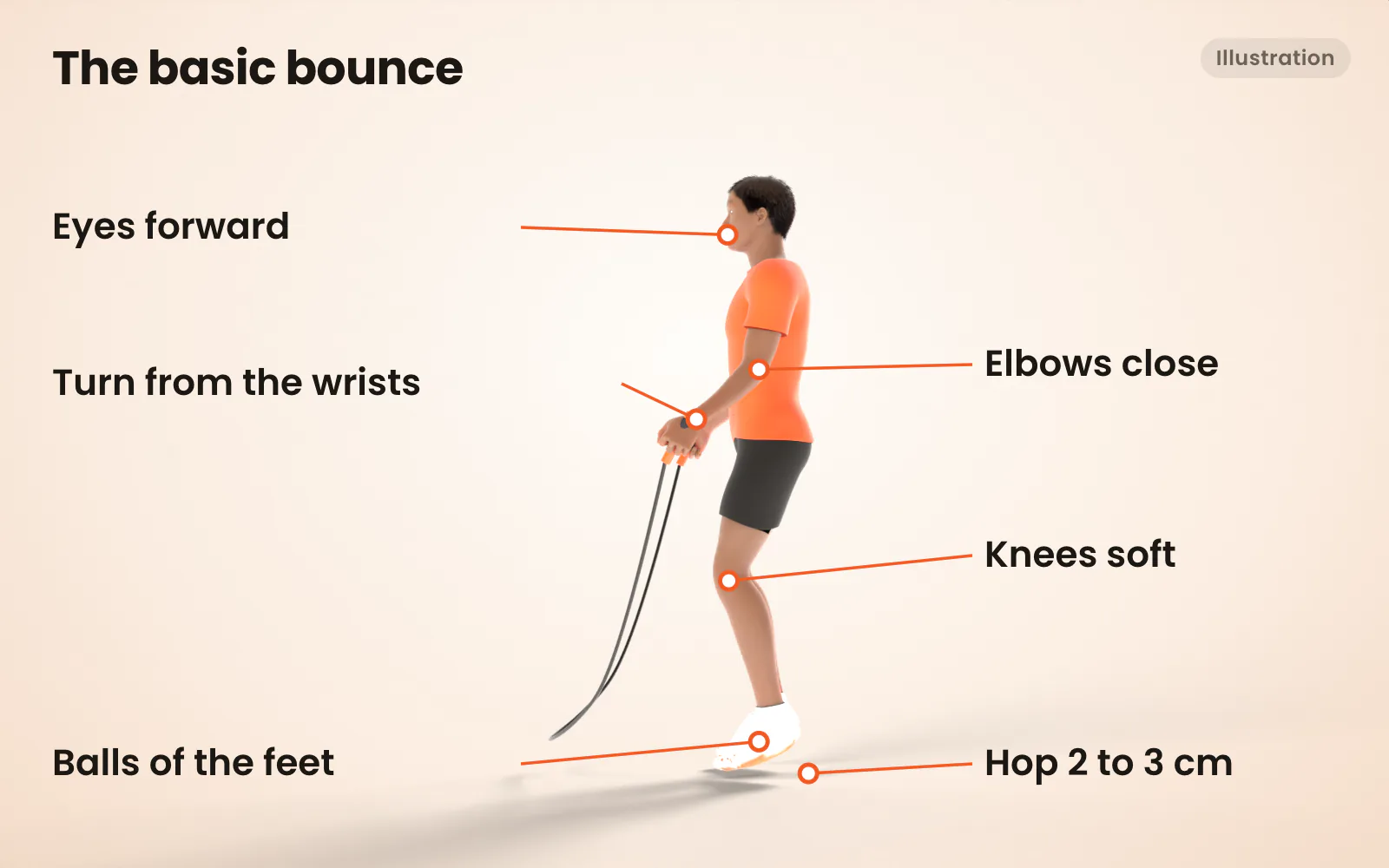
Both feet together, a hop of 2 to 3 cm, elbows close, the rope turned from the wrists. Every other move starts from this one, so it is worth getting smooth first. Our beginner guide covers the rope length and the common mistakes.
2. Alternate-foot step
A light jog on the spot: one foot clears the rope, then the other. In a 1988 study of experienced jumpers it was the most energy-efficient of five techniques, which makes it the move for long sets.
- Common mistake: lifting the knees. Keep the feet low and quick.
3. Side swing
Hold both handles in one hand, or both hands together, and swing the rope beside your body, once on the left, once on the right. No jump. Use it to rest without stopping, or between two harder moves.
4. Side to side
The basic bounce, landing a few centimetres to the left, then to the right. Keep your shoulders still; only the feet move.
Level 2: once level 1 is easy
5. Forward and back
The basic bounce, landing a little forward, then a little back. Small steps keep the rope from catching your toes.
6. Boxer skip
Shift your weight onto one foot for two turns of the rope, then the other, while the free foot barely touches the floor. It is the light, shuffling rhythm you see boxers use, and it spreads the work between both calves.
- Common mistake: a big rock from side to side. The shift is small; the upper body stays almost still.
7. High knees
The alternate-foot step, lifting each knee to about hip height. It needs a faster turn, so try it in short bursts of 10 to 15 seconds.
Level 3: once you can jump for a minute
8. Single-leg hop
Five to ten bounces on one foot, then switch. Start close to a wall in case you lose your balance.
9. Criss-cross
As the rope comes over your head, cross your forearms in front of your waist so you jump through a loop, then uncross on the next turn. Cross at the wrists and forearms, not just the hands, or the loop is too small to jump through.
- Build-up: swing the rope and practise crossing and uncrossing without jumping, then add one criss-cross between several basic bounces.
10. Double under
The rope passes under your feet twice in one jump. Jump a little higher than for the basic bounce and flick your wrists faster; your elbows stay close.
- Build-up: several basic bounces, one double under, rest. Then two in a row. A slightly heavier rope can make the timing easier to feel.
- Common mistake: pulling the knees up instead of jumping higher. Keep your legs almost straight.
Harder moves don't need to be fast to count as a workout. Rope jumping is vigorous at any pace in the Compendium of Physical Activities: 8.3 METs below 100 skips a minute, 11.8 from 100 to 120 and 12.3 above.
Put them into a workout
- Learning session: 10 rounds of 30 seconds of the basic bounce with one new move mixed in, 30 seconds of rest.
- Moves mix: the footwork mix in our beginner routines uses moves 1, 2 and 4.
- Every day: the 30-day challenge counts jumps, and any of the level 1 moves count toward it.
If you have joint, heart or other health problems, check with your doctor before adding high-impact moves such as single-leg hops and double unders.
Count the sets
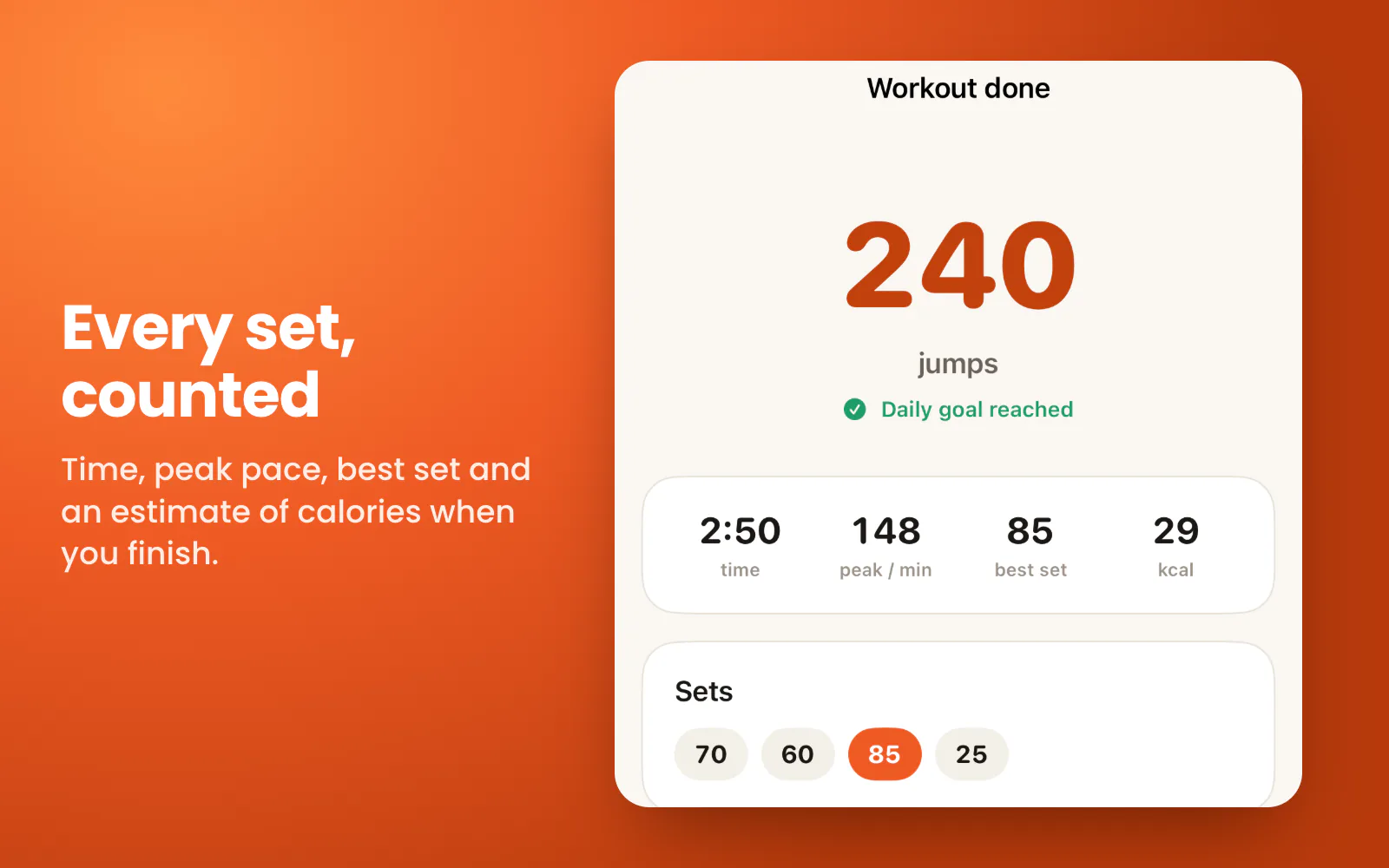
SkipCount counts each landing with the iPhone camera, says the count out loud and shows every set when you finish, so you can see your longest set grow as the moves get easier. We have not tested how it counts criss-crosses, double unders or one-foot moves, so check any new move against a short video first. Your first 3 workouts are free; after that, counting, timers, goal mode and full history are part of SkipCount Pro.
Download SkipCount and count your next practice set.
Questions
What are the best jump rope exercises for beginners?+
The basic bounce, the alternate-foot step and side to side. All three keep the hop low and the rope at the same speed, so they build rhythm before you add anything harder.
How do you do a double under?+
Jump a little higher than usual and flick your wrists faster, so the rope passes under your feet twice in one jump. Start with one double under after several basic bounces, then rest. Keep your elbows close; the speed comes from the wrists, not the arms.
What is the boxer skip?+
A bounce that shifts your weight from one foot to the other every two turns of the rope, while the other foot barely touches the floor. It feels like a light shuffle and is easier on the calves than jumping on both feet for a long set.
What is the easiest jump rope trick?+
The side swing: hold both handles together and swing the rope beside your body, one side then the other, without jumping. It is also the move to use while you catch your breath between harder ones.
Which jump rope move burns the most calories?+
Speed matters more than the move. The Compendium of Physical Activities lists 8.3 METs below 100 skips a minute, 11.8 from 100 to 120 and 12.3 above. Harder moves mostly add coordination; in a 1988 study the alternate-foot step was the most energy-efficient of five techniques, which is why it is good for long sets.