Shin splints from jumping rope: why they happen, what to do and how to come back
 By Rupangkan KalitaPublished
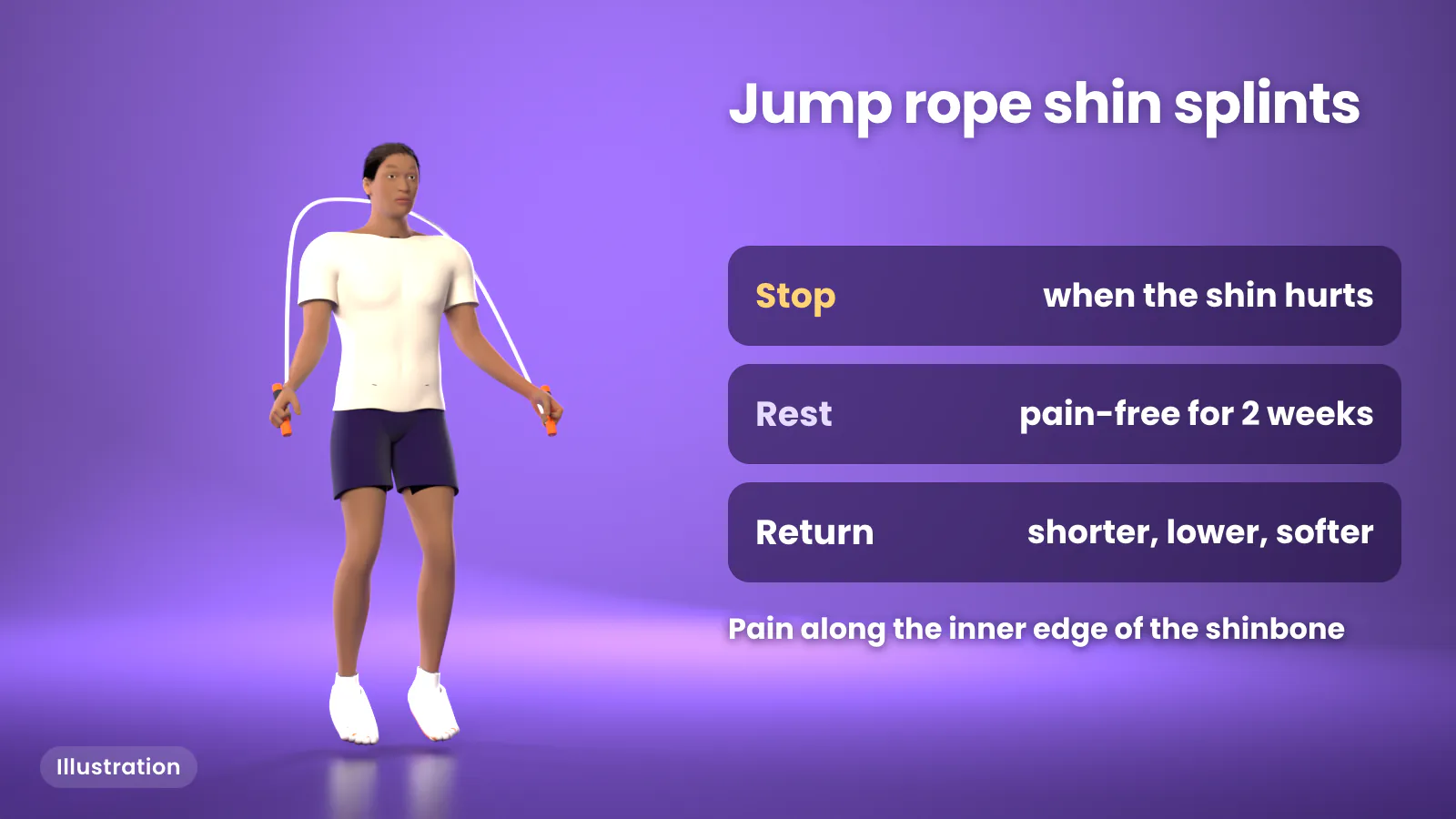
Shin splints are pain along the inner edge of the shinbone after too much load on the lower leg. The NHS says they are more likely when you start exercising after a break or jump on hard surfaces, and usually settle within a few weeks. Stop the rope while it hurts, switch to gentle exercise, and come back only after about 2 pain-free weeks, as the AAOS advises, with shorter sets, lower hops and a softer floor. See a doctor if the pain gets worse, is severe, or does not ease with rest.
Shin pain is one of the most common complaints from people who have just started jumping rope. Usually it means the lower legs got more work than they were ready for. Here is what shin splints are, what health services advise, what studies found about who gets them, and a way back to the rope that starts small.
This page is general information, not a diagnosis. If your pain is severe, getting worse or not easing with rest, see a doctor or physiotherapist.
What shin splints are
Shin splints (medial tibial stress syndrome) are pain and tenderness along the inner edge of the shinbone. The AAOS describes the pain as sharp or dull, during and after exercise, and sore to touch. The NHS says they happen when you put too much stress on your leg, and are more likely if:
- you started exercising after not being active for some time,
- you run or jump on hard surfaces,
- your technique is not good.
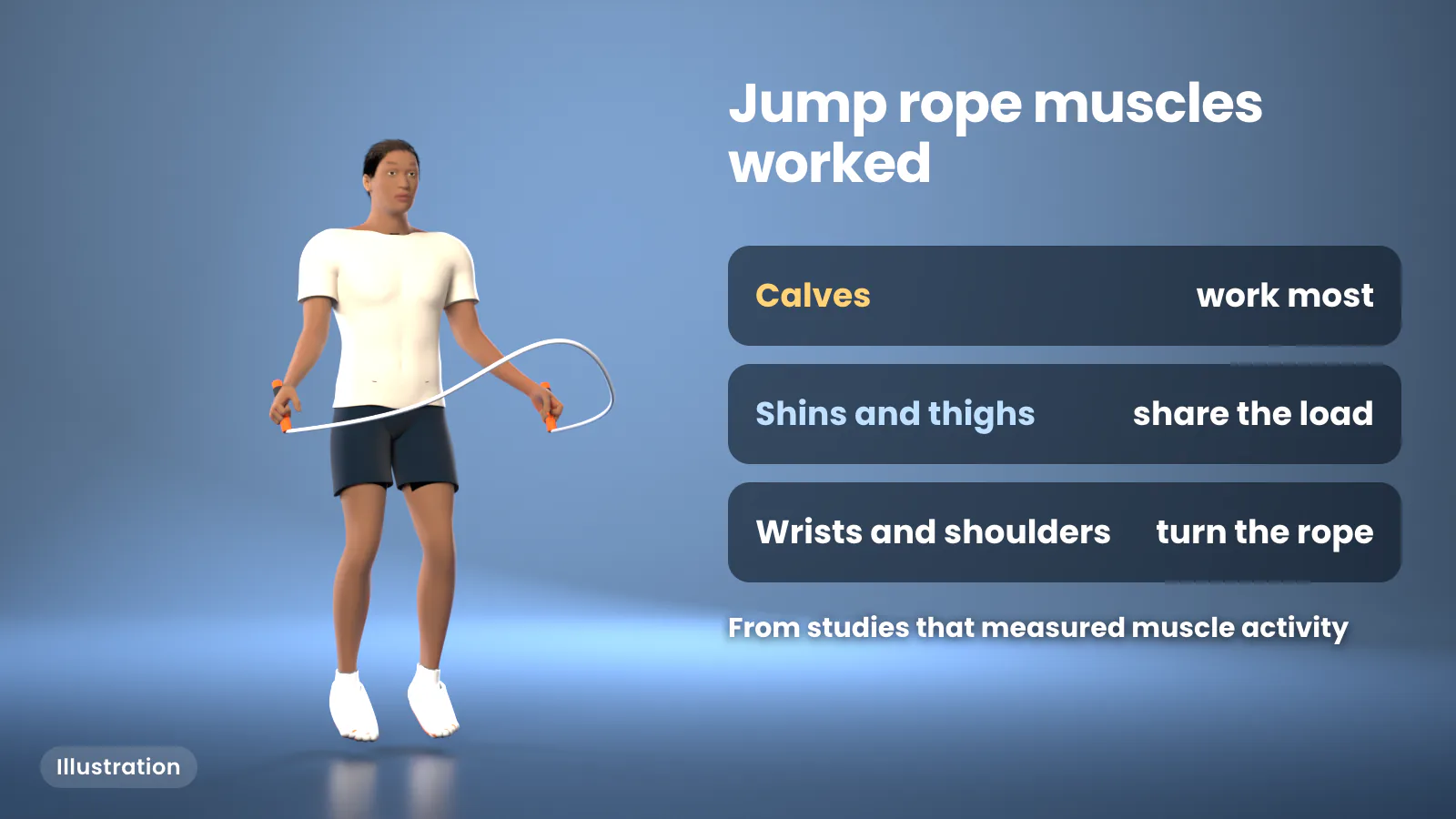
All three are common for new rope jumpers. Every landing loads the calves and shins, and the first weeks often mean too many jumps on a hard floor with high, heavy hops.
Why the rope gets the blame
Jumping rope puts less load on the hips and knees than running: in a 2021 motion-lab study, a two-foot bounce at 105 skips a minute landed with lower ground reaction forces than running, though higher than walking. The load is still concentrated in the lower leg, and it adds up fast. A 10-minute session can mean 1,000 landings or more.
So the usual cause is the amount, not the rope. Going from nothing to long daily sessions gives the shins no time to adapt.
What to do when your shins hurt
What the NHS and AAOS advise:
- Stop the rope while it hurts. The NHS says not to continue the exercise that caused the shin splints.
- Rest and ice. The NHS suggests an ice pack wrapped in a towel on the shin for up to 20 minutes every 2 to 3 hours.
- Keep moving gently. Switch to low-impact exercise such as swimming or yoga while you heal.
- Come back slowly. The AAOS advises being pain-free for at least 2 weeks before returning, then exercising less often, for less time and at a lower intensity than before.
The NHS says shin splints usually get better within a few weeks. See a GP or physiotherapist if the pain is getting worse or not improving, and get urgent help if it is severe or you have injured your shin. The AAOS notes that a stress fracture can cause similar pain and may need imaging to rule out.
What not to count on: a 2013 systematic review of 11 treatment trials found none free enough from bias to recommend any specific treatment. Braces, stretching, strengthening and compression stockings were not shown to work. Rest and a gradual return remain the base.
A way back to the rope
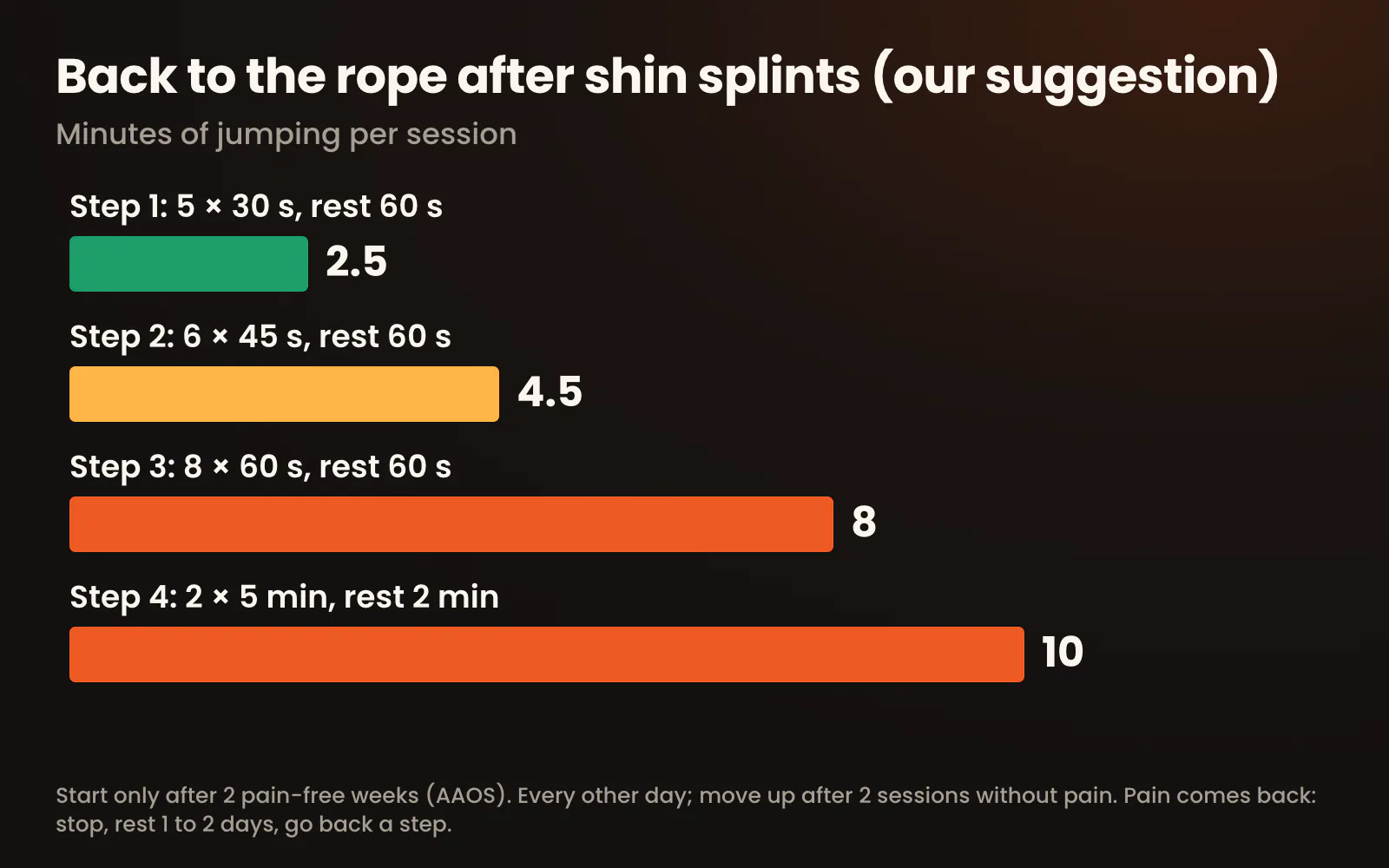
Our suggestion, once you have been pain-free for 2 weeks:
| Step | Sets | Jumping per session |
|---|---|---|
| 1 | 5 × 30 seconds, 60 seconds rest | 2.5 minutes |
| 2 | 6 × 45 seconds, 60 seconds rest | 4.5 minutes |
| 3 | 8 × 60 seconds, 60 seconds rest | 8 minutes |
| 4 | 2 × 5 minutes, 2 minutes rest | 10 minutes |
- Jump every other day, not daily.
- Move up a step only after 2 sessions without pain during or the day after.
- If the pain comes back, do what the AAOS advises: stop, rest for a day or two, then return shorter and easier. Go back a step.
How to keep it from coming back
- Low hops. Lift only 2 to 3 cm off the floor. High, heavy hops multiply the load on every landing.
- Land on the balls of your feet, softly, with knees slightly bent. Our jump rope for beginners guide covers the form.
- Softer floor. Wood, a rubber gym floor or a jump rope mat instead of concrete or tiles. The NHS lists hard surfaces as a cause.
- Supportive shoes. Both the NHS and AAOS point to shoes that fit and support your foot.
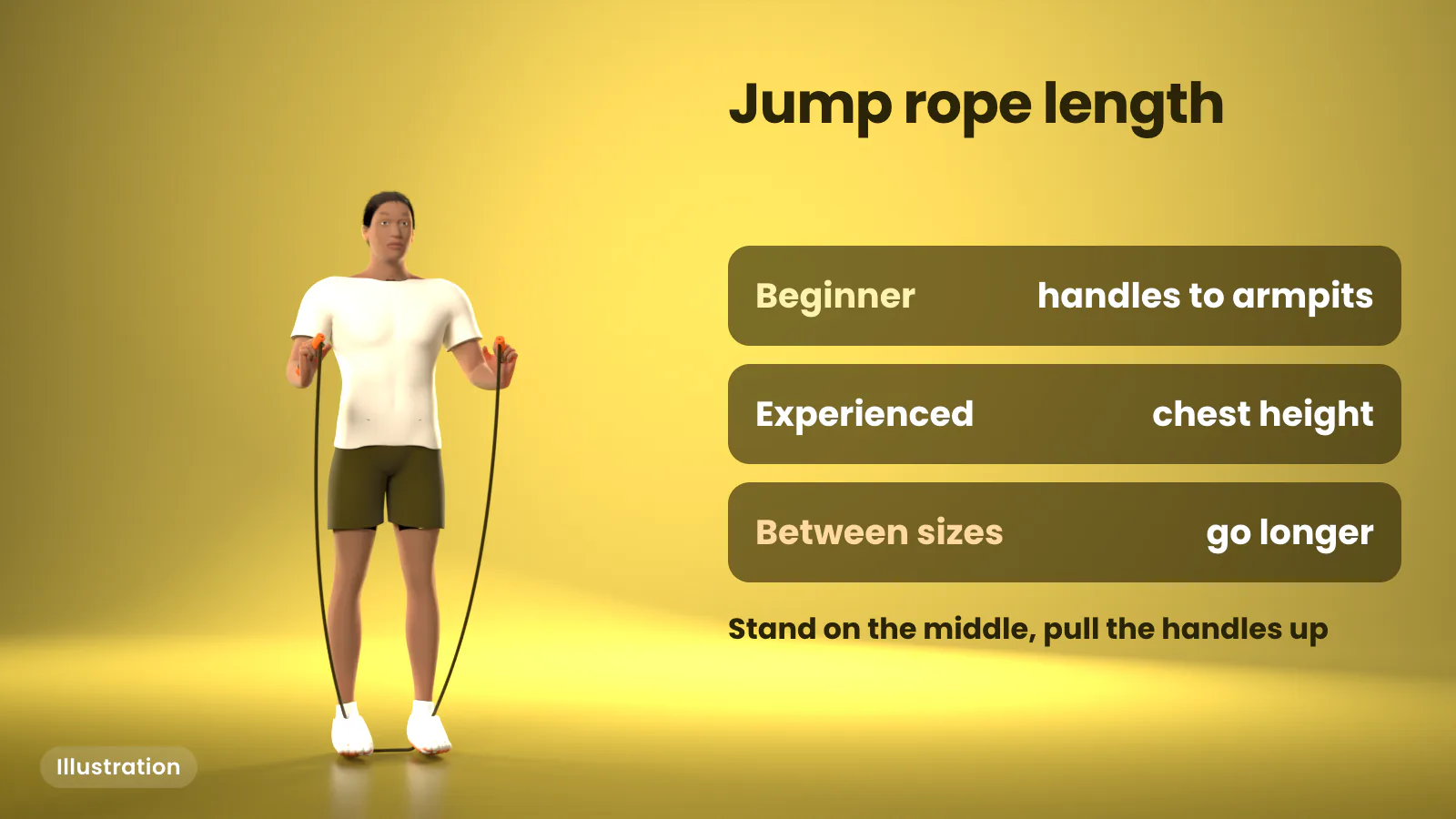
- The right rope length. A rope that is too short makes you hop higher to clear it. See our jump rope length chart.
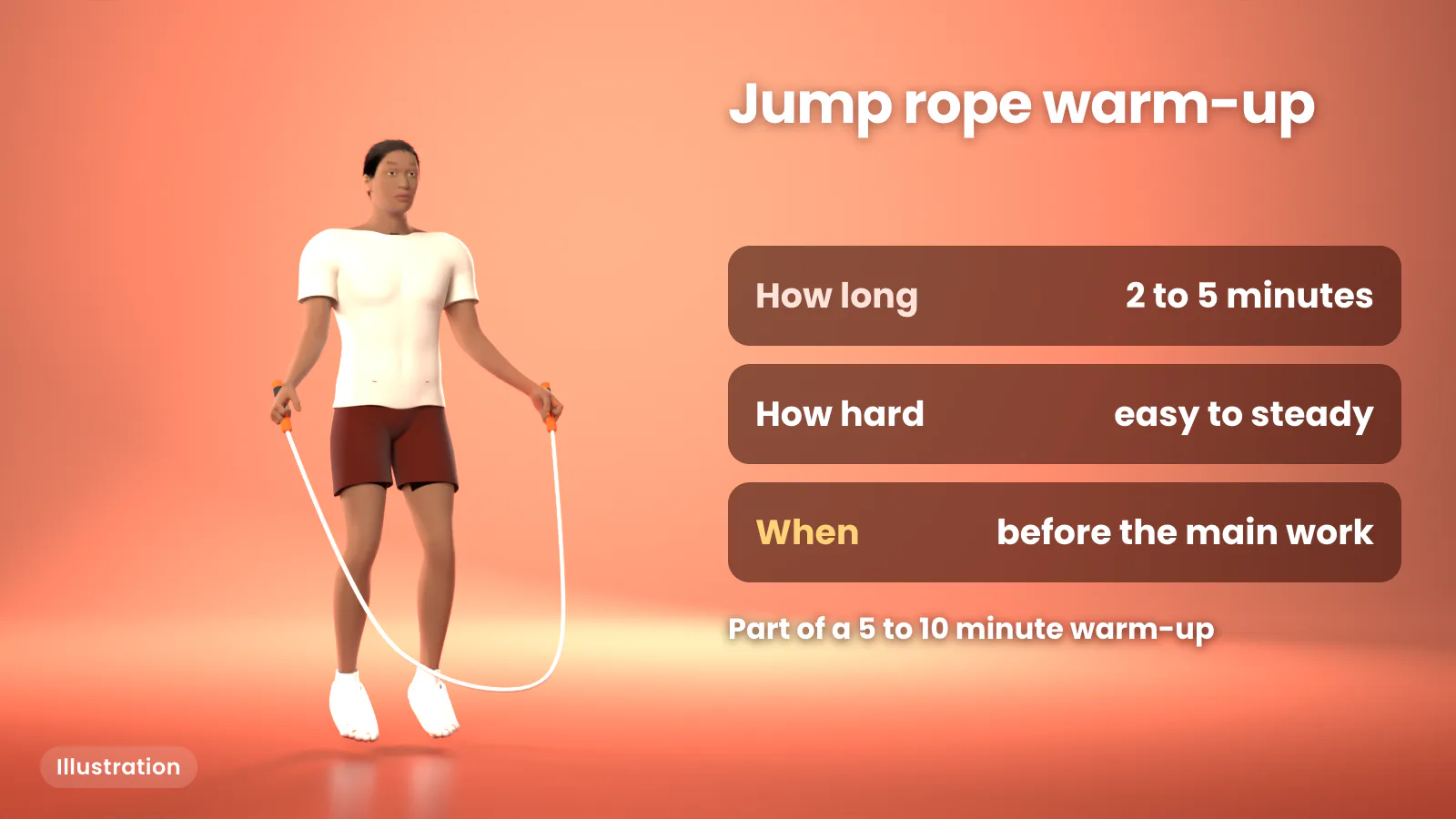
- Warm up. A few easy minutes first, as in our jump rope warm-up.
- Mix in low-impact days. The AAOS suggests cross-training with swimming or cycling.
Who is more at risk: a 2013 meta-analysis of studies in runners linked shin splints with being female, having had them before, fewer years of training, a higher body mass index, a larger navicular drop (an arch that flattens more under load) and using orthotics. These come from runners; nobody has measured the same for rope jumping, but if several apply to you, build up even more slowly.
Count every jump while you build up
A return plan only works if you stick to the numbers, and sets are easy to stretch when you feel good. SkipCount counts every jump with the iPhone camera, has a timed mode for fixed-length sets, and shows the count of every set when you finish, so you can see how much you really did each session. Your first 3 workouts are free; after that, counting, timers and full history are part of SkipCount Pro.
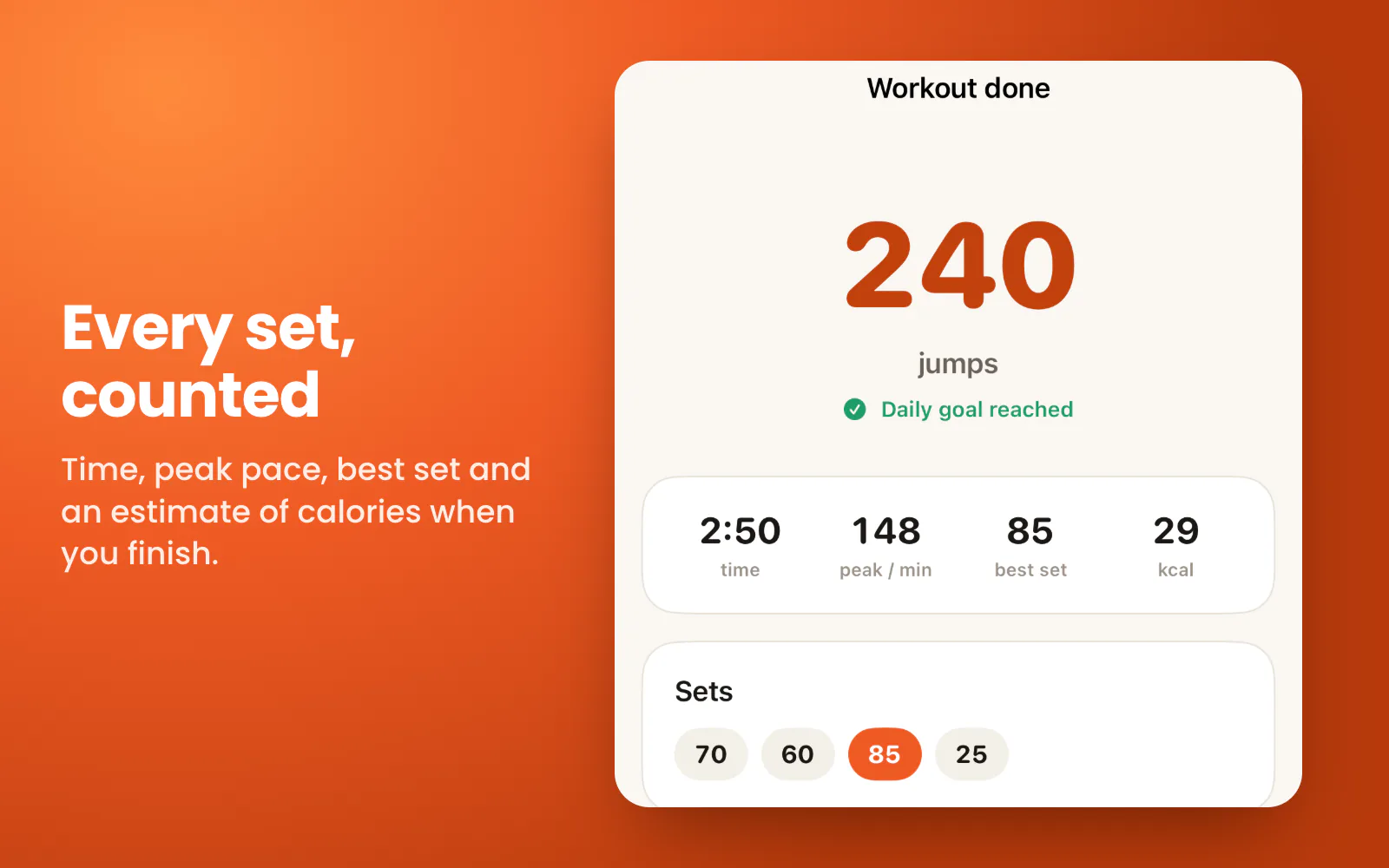
Download SkipCount and keep your sets short while you build back up.
Questions
Does jumping rope cause shin splints?+
It can. Shin splints come from more stress on the lower leg than it is ready for, and rope jumping loads the calves and shins on every landing. The NHS lists starting exercise after a long break, hard surfaces and poor technique as reasons they happen. Most cases come from doing too much too soon.
Can I keep jumping rope with shin splints?+
The NHS advises not to continue the exercise that caused them and to switch to gentle exercise such as swimming or yoga while you heal. The AAOS suggests being pain-free for at least 2 weeks before going back, then starting shorter, easier and with more rest.
How long do shin splints from jump rope take to heal?+
The NHS says shin splints usually get better within a few weeks. If the pain is getting worse or not improving, see a doctor or physiotherapist; the AAOS notes that a stress fracture can look like shin splints and may need imaging.
How do I prevent shin splints when jumping rope?+
Build up slowly in short sets, keep hops low (2 to 3 cm is enough to clear the rope), jump on a forgiving floor such as wood or a mat rather than concrete, wear supportive shoes, and use a rope of the right length so you do not have to hop high to clear it.
Who is more likely to get shin splints?+
A 2013 meta-analysis of studies in runners linked shin splints with being female, a previous history of shin splints, fewer years of training, higher body mass index, a larger navicular drop (a flatter-falling arch) and using orthotics. Those are runner studies; no comparable data exists for rope jumping.
Sources
- NHS: Shin splints (checked 2026-11-20)
- American Academy of Orthopaedic Surgeons (OrthoInfo): Shin splints (checked 2026-11-20)
- Newman P, et al. Risk factors associated with medial tibial stress syndrome in runners: a systematic review and meta-analysis. Open Access J Sports Med, 2013 (checked 2026-11-20)
- Winters M, et al. Treatment of medial tibial stress syndrome: a systematic review. Sports Med, 2013 (checked 2026-11-20)
- Mullerpatan R, et al. Lower extremity joint loading during bounce rope skip in comparison to run and walk. J Bodyw Mov Ther, 2021 (checked 2026-11-20)